Monument Signs vs. Pylon Signs: What’s the Difference?
When researching freestanding sign options, you might hear two terms: monument signs and pylon signs. While both are freestanding commercial signs, they serve different purposes. So, which one is right for your business?
What is a Monument Sign?
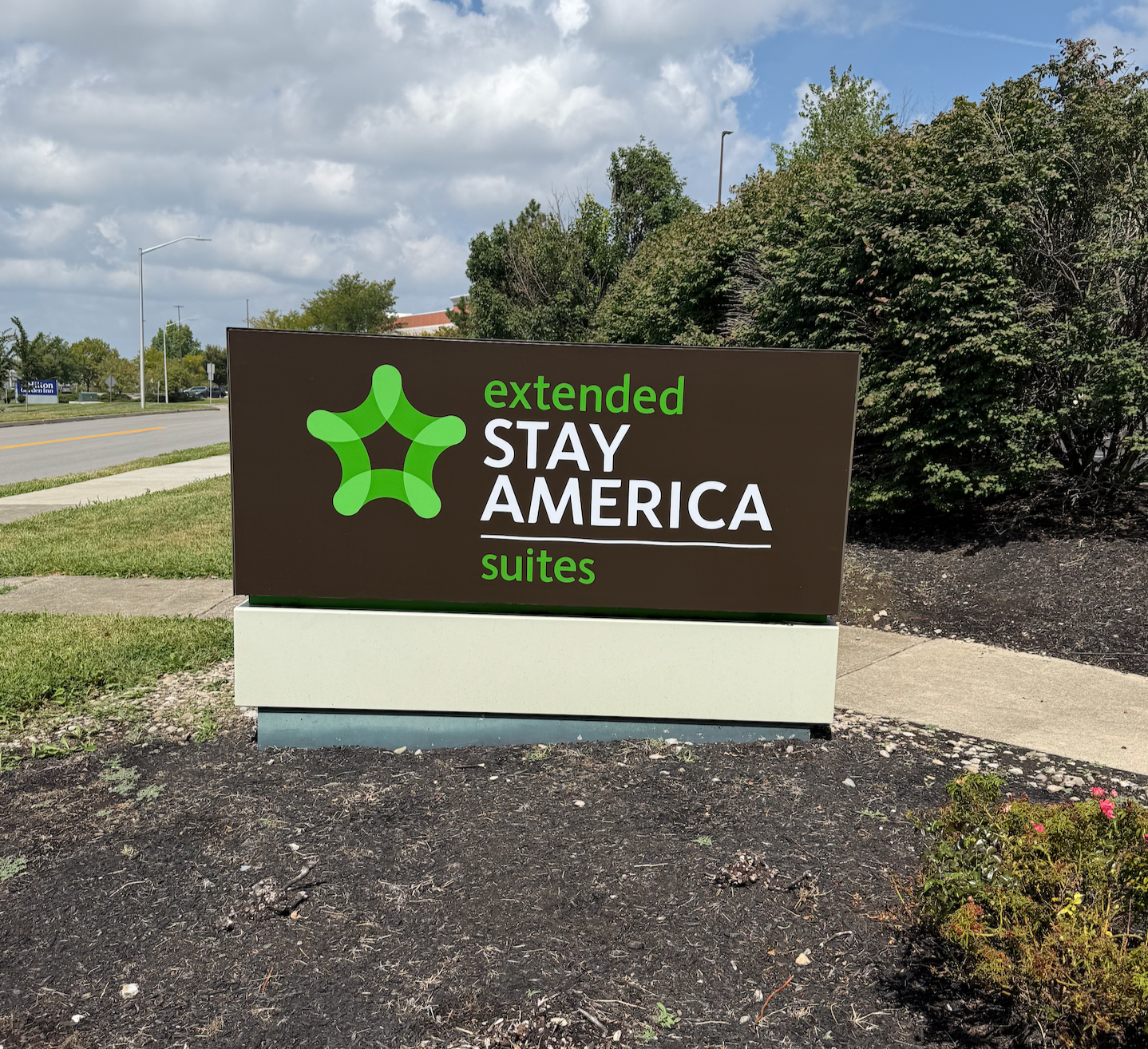
A monument sign.
A monument sign, sometimes called a ground sign, is a freestanding sign that sits relatively close to the ground and typically has a substantial base structure surrounding the sign face. They’re usually between three to eight feet tall, at eye level for drivers and pedestrians. The base is built from sturdy, weather-resistant materials like brick, concrete, metal, or stucco, generally with little to no open space between the sign and the ground. You may see monument signs positioned near property entrances or driveways to mark a location.
Monument signs are commonly used for offices and business parks, medical centers, shopping centers, apartment complexes, residential neighborhoods, churches, and schools. These signs are usually designed to complement the landscaping and surrounding property and can offer a polished and professional look to your business. The goal of monument signage is typically to welcome visitors and guide them to the correct location.
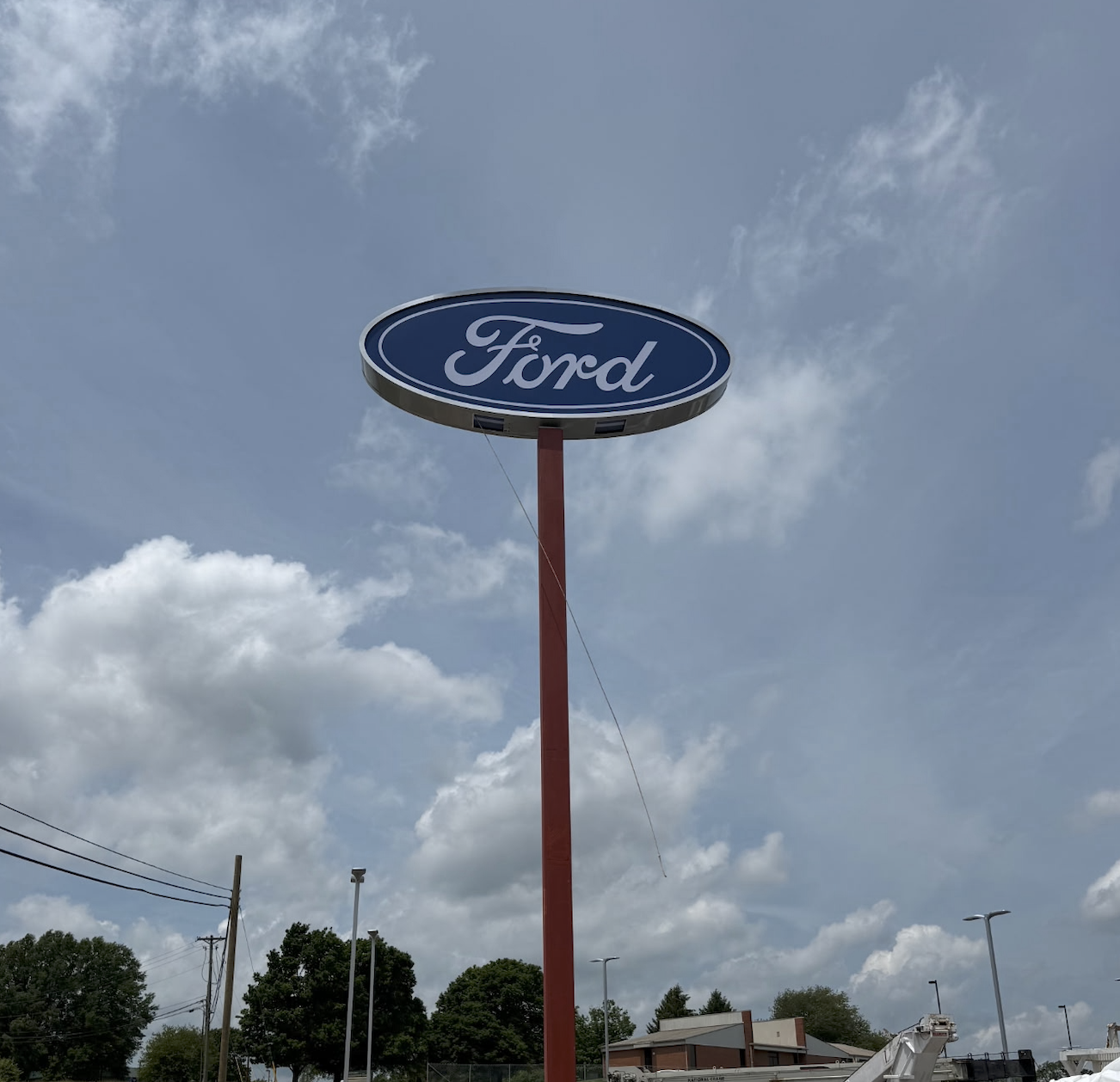
A pylon sign.
What is a Pylon Sign?
A pylon sign, sometimes called a pole sign, is a taller freestanding sign, designed to provide visibility from a greater distance. They range from 20 feet to 100 feet tall, sometimes taller, usually supported by a sturdy steel or aluminum pole. You may see pylon signs positioned along major roads and highways, because the height makes them stand out above buildings, trees, and overpasses to passing traffic.
Pylon signs are commonly used for gas stations, hotels, auto dealerships, restaurants, and shopping centers. The goal of pylon signage is almost always to create visibility, capturing the attention of drivers before they miss a turn or exit, or to stand out visually over nearby competing businesses.
What are the Similarities?
Both monument signs and pylon signs are exterior freestanding signs, meaning they are not attached to a building and have their own support structures. Both types of signs can be illuminated with internal or external lighting, can be customized to display either a single business or multiple tenant panels, and are designed with durable materials meant to withstand the elements. Additionally, both monument and pylon signs are meant to create visibility and direct visitors to your business.
Which One is Better?
Neither is automatically better. The right choice depends on your property. A monument sign may make sense if your building is relatively close to the road and you want a substantial, attractive entrance sign. A pylon sign may make sense if your property is set back from the road and you need your business to be visible from a greater distance. Some properties use both types of signage, for example, a pylon sign may identify a commercial development from the road while an individual monument sign helps customers find a specific business once they’re on the property.
Before deciding, consider:
Traffic: How fast are people traveling past the property?
Distance: How far away will customers first see the sign?
Visibility: Will any trees, buildings, landscaping, or other signs block it?
Branding: How much information needs to be displayed?
Property: Where can the sign physically be located?
Regulations: What size, height, placement, and illumination are permitted?
Forward Signs installs monument and pylon signage for businesses throughout Greater Cincinnati, Northern Kentucky, and Southeast Indiana.
Not sure which type of freestanding sign is right for your business? Contact Forward Signs today to get started!